
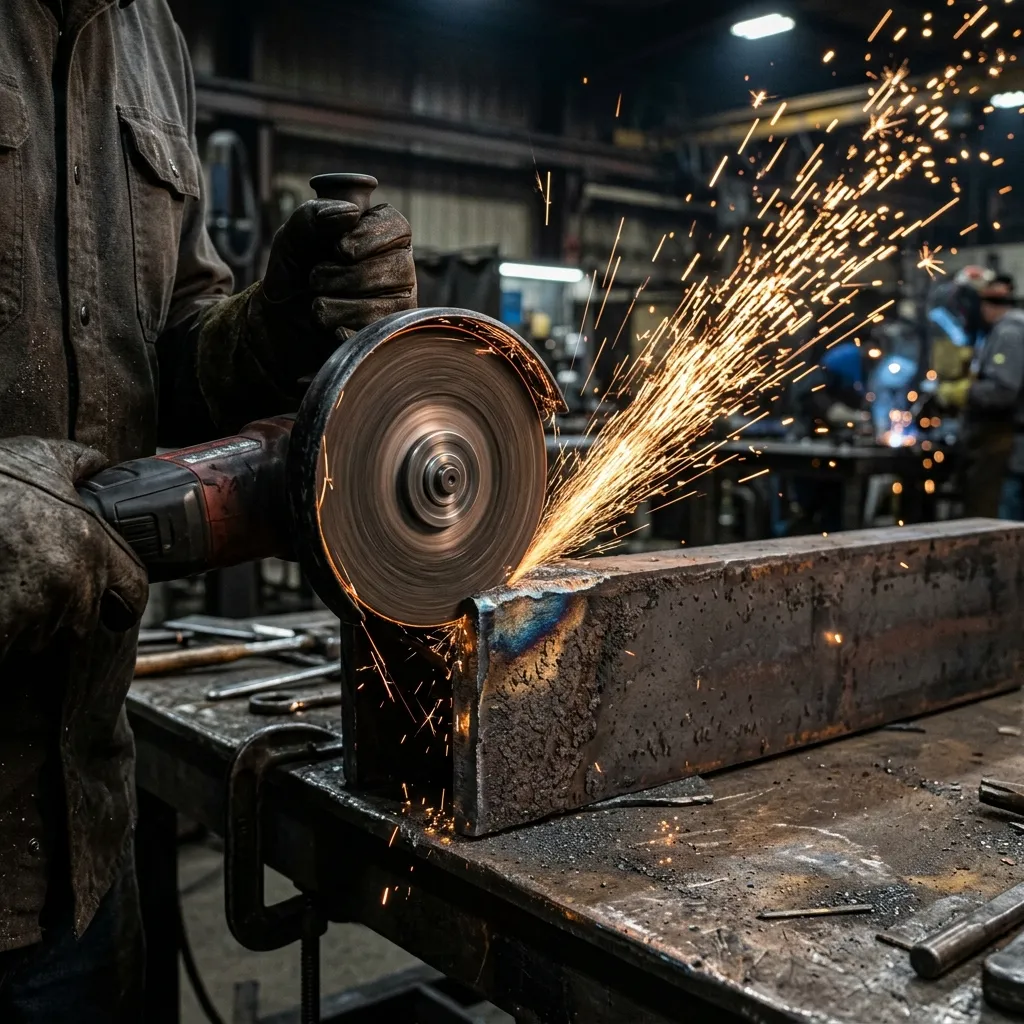
Why Wheel Selection Matters
The grinding wheel is the most direct interface between your machine and the workpiece. A mismatch between wheel specification and application results in:
- Rapid wheel glazing (bond becomes harder than the workpiece, wheel stops cutting)
- Wheel loading (workpiece material fills the abrasive pores)
- Poor surface finish
- Excessive heat generation, causing discolouration or microstructural damage
- Premature wheel failure
The Key Parameters
1. Abrasive Type
Aluminium Oxide (A) - Standard choice for mild steel and general carbon steel. Hard, tough grain that self-sharpens under grinding pressure. Most cost-effective for fabrication shops.
Zirconia Alumina (ZA) - Higher fracture toughness than standard Al2O3. Preferred for heavy stock removal, foundry work, and cast iron. The ZIRCOTECH range from Apidor uses premium zirconia grain.
Silicon Carbide (C) - Sharper grain, but brittle. Best for non-ferrous materials (aluminium, brass, titanium) and non-metallic surfaces (glass, stone). Not recommended for steel.
Ceramic Alumina - Self-sharpening microcrystalline grain. Ultra-premium. Slowest wear rate, coolest cutting. Reserved for aerospace, titanium alloys, and heat-sensitive stainless steel grinding.
2. Grit Size
| Grit | Application |
|---|---|
| 16-24 | Heavy stock removal, foundry castings |
| 30-46 | Standard grinding, weld bead removal |
| 60-80 | Intermediate finishing |
| 100+ | Fine finishing, before polishing |
3. Bond Grade (Hardness)
The bond grade controls how quickly the wheel releases worn grains:
- Soft bonds (E-J) - Use on hard materials (HSS, carbide, hardened steel). The bond releases quickly so fresh, sharp grain is always presented.
- Medium bonds (K-O) - General purpose for most fabrication work.
- Hard bonds (P-Z) - Use on soft materials (aluminium, soft steel) where the wheel needs to resist premature breakdown.
4. Stainless Steel - The Special Case
Stainless steel grinding requires iron-free, sulphur-free, chlorine-free abrasive and bond formulations. Contamination from ferrous particles causes rust staining and can compromise the corrosion resistance of the workpiece. The Apidor STAINLESS STEEL grade uses a dedicated iron-free compound.
Standard Selection Guide
| Application | Recommended Wheel |
|---|---|
| Mild steel surface grinding | Type 27, A30-46 RBF |
| Stainless steel grinding | Type 27, Iron-free formulation |
| Cast iron finishing | Type 27, ZA30-46 |
| Weld bead removal | Type 27, A24-36 RBF |
| Aluminium | Type 27, Silicon Carbide |
| Heavy foundry | Type 27/28, ZA16-24 |
Contact for Specification Advice
Our technical team can map your specific application - material, machine RPM, operator requirement, and target finish - to the correct wheel specification. Contact us before your next order.